
Sodium-Ion Batteries Reach Production Cars: What CATL Naxtra and Changan Change in 2026
Sodium-ion batteries have spent years being discussed as a possible alternative to lithium-ion technology, but 2026 is the year when that discussion becomes much more practical for the car industry. CATL and Changan have moved Naxtra sodium-ion batteries from development programmes and winter trials towards series-production passenger vehicles, demonstrating that sodium chemistry can now deliver the range and everyday usability required for a modern electric car. The change does not mean lithium-ion batteries are about to disappear. Instead, sodium-ion technology is emerging as another serious option, particularly for vehicles used in cold climates, cars that do not require exceptionally long ranges and manufacturers seeking a broader choice of battery materials.
How CATL and Changan Are Moving Sodium-Ion Batteries Into Production Cars
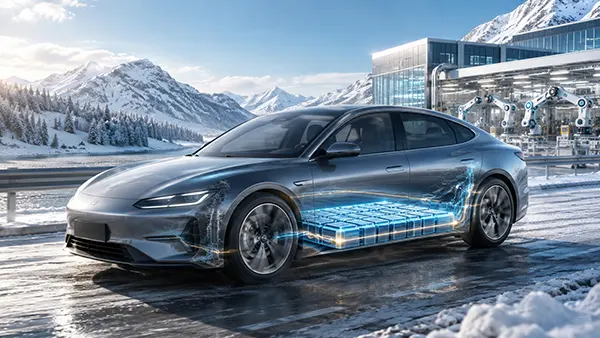
The most important development came on 5 February 2026, when CATL and Changan announced what they described as the world’s first mass-production passenger vehicle equipped with sodium-ion batteries. The presentation took place in Yakeshi, Inner Mongolia, where very low winter temperatures also provided an appropriate setting for demonstrating one of the chemistry’s main advantages. CATL confirmed that the vehicle would use its Naxtra battery and said the initial configuration could provide more than 400 kilometres of pure-electric driving range. This is a significant step beyond the small experimental sodium-ion cars and demonstration fleets that had previously appeared in China.
The passenger car presented during Changan’s sodium-ion programme has been identified as the Changan Qiyuan A06, sold under the Nevo name in some international communications. Industry reports describe the sodium-ion version as using a battery of about 45 kWh. More important than the precise pack size is the type of vehicle chosen for the first deployment. The A06 is not an ultra-small urban EV designed simply to prove that sodium-ion cells can propel a car. It is a conventional passenger model intended to operate in the same market as established battery-electric cars, giving the technology a much more demanding test of range, comfort, power delivery and daily reliability.
Changan’s plans also extend beyond one vehicle. CATL has said it will act as Changan’s strategic sodium-ion battery partner and that Naxtra technology is intended for models across brands including AVATR, Deepal, Qiyuan and UNI. That does not mean every vehicle from these brands will switch to sodium-ion cells. Changan is pursuing a mixed battery strategy in which sodium-ion and lithium-ion chemistries can be selected according to the requirements of a particular car. This approach is likely to be more realistic than trying to replace an established battery chemistry across an entire model range at once.
Why Naxtra Is Different From Earlier Sodium-Ion Batteries
Energy density has traditionally been one of the biggest obstacles to using sodium-ion batteries in passenger cars. Sodium ions are larger and heavier than lithium ions, which generally makes it harder to store the same amount of energy in a battery of comparable mass. CATL says its Naxtra passenger-vehicle cells can reach an energy density of up to 175 Wh/kg. That figure places the new battery close to the territory occupied by mainstream LFP cells and is high enough for CATL to combine the chemistry with Cell-to-Pack integration and achieve a claimed electric range of more than 400 kilometres.
Naxtra’s strongest advantage is much easier for a driver to understand: it is designed to work unusually well in severe cold. CATL reports that the battery can retain more than 90% of its available capacity at −40°C and continue delivering power at temperatures as low as −50°C. At −30°C, the company says discharge power can be almost three times that of a comparable LFP battery under the same conditions. These figures matter because winter operation remains a weakness of many electric cars. Low temperatures slow battery reactions, reduce available energy and can limit both performance and charging speed, particularly when a battery has not been preconditioned.
Safety is another part of CATL’s case for Naxtra. The company has subjected the cells and packs to severe mechanical tests including crushing, drilling and cutting, reporting no smoke or fire during those demonstrations. More importantly for a production vehicle, Naxtra became the first sodium-ion battery certified under China’s GB 38031-2025 safety requirements for electric-vehicle traction batteries. The updated standard took effect on 1 July 2026 and introduces demanding requirements covering areas such as thermal propagation, impact protection and behaviour following repeated fast charging. Passing a recognised vehicle-battery standard is more meaningful for commercial adoption than a laboratory demonstration alone.
What Sodium-Ion Technology Could Change for Electric-Car Drivers
For drivers in colder regions, the practical benefit could be greater consistency between summer and winter use. An EV does not need to preserve every kilometre of its official range in freezing weather to be useful, but large seasonal losses can make journey planning difficult and increase the need for charging. A battery that maintains a greater share of its capacity and power in very low temperatures can make an electric car more predictable. This is particularly relevant in northern China and other markets with long, severe winters, where cars can remain outside for hours at temperatures well below freezing.
There is still a trade-off. A sodium-ion car with roughly 400 kilometres of claimed range will not immediately compete with the longest-range lithium-ion models that can travel considerably farther under official test cycles. CATL believes future sodium-ion electric cars could reach approximately 500 to 600 kilometres as cell technology and the supply chain improve, but those figures are targets rather than a reason to assume every Naxtra vehicle will achieve them. For a driver covering modest daily distances, 400 kilometres can already be sufficient. For buyers who regularly make very long motorway journeys, higher-energy lithium-based batteries can remain the more practical choice.
The frequently repeated claim that sodium-ion batteries will automatically make electric cars much cheaper also needs qualification. Sodium itself is abundant, and leading sodium-ion chemistries can reduce dependence on lithium, graphite and cobalt. However, raw-material availability is only one part of battery cost. Lithium-ion manufacturing has benefited from enormous investment, mature suppliers and very large production volumes. Sodium-ion cells are only beginning to gain comparable industrial infrastructure. In 2026, their long-term cost potential is therefore more important than assuming an immediate price advantage for every car equipped with them.
Sodium-Ion Versus LFP Is Not a Simple Winner-Takes-All Contest
LFP remains a difficult benchmark to beat. It is already widely used in mass-market electric cars because it combines comparatively low material costs, long service life, good safety characteristics and increasingly competitive energy density. Years of manufacturing optimisation have also reduced the cost of LFP packs considerably. Sodium-ion technology enters a market in which LFP is still improving, rather than replacing an outdated battery. Recent research continues to find that current sodium-ion cells can lag established LFP technology in energy density and cost efficiency, despite rapid improvements at the cell level.
Sodium-ion batteries nevertheless offer a different set of material advantages. The International Energy Agency notes that leading sodium-ion designs can avoid lithium and graphite and may also avoid cobalt while using less nickel than nickel-rich lithium-ion batteries. Sodium-ion cells can use aluminium in places where lithium-ion designs normally require copper, creating another opportunity to change material demand. For the automotive industry, the value is not simply that sodium is plentiful. A commercially viable second chemistry can reduce dependence on a narrow group of materials and give manufacturers more flexibility when commodity prices or supply conditions change.
This helps explain why CATL and Changan describe their strategy as one in which sodium and lithium technologies coexist. A compact or medium-sized EV intended for city use and harsh winters may benefit greatly from Naxtra even if its maximum range is lower than that of a premium lithium-powered car. A long-distance model may still justify a higher-energy lithium chemistry. Range-extended vehicles and other electrified cars could create further opportunities because their batteries do not always need to provide the entire journey range alone. Selecting chemistry according to the job of the vehicle can ultimately be more useful than treating one battery type as universally superior.
Why the Changan Rollout Matters Beyond a Single Electric Car
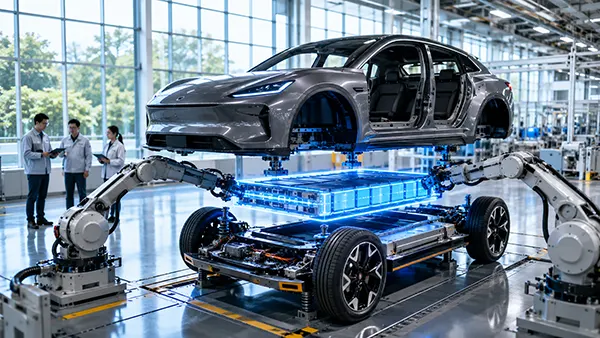
The importance of Changan’s 2026 programme is that a battery becomes commercially meaningful only when it can be integrated into a real vehicle and produced consistently. Laboratory energy density is not enough. Carmakers need cells that behave predictably across thousands of charging cycles, survive vibration and impacts, work with cooling and battery-management systems, pass regulatory tests and can be manufactured in large quantities without unacceptable variation. Changan’s programme therefore gives CATL an opportunity to validate Naxtra not simply as an individual cell but as part of a complete passenger vehicle exposed to ordinary and extreme driving conditions.
The rollout also gives other carmakers a clearer reference point. Earlier sodium-ion passenger cars showed that the chemistry could work, but volumes were limited and specifications tended to suit inexpensive short-range vehicles. A battery reaching 175 Wh/kg and powering a conventional electric car beyond 400 kilometres changes the discussion. It creates a more credible comparison with LFP for future vehicle programmes. If Naxtra performs reliably in customer use, manufacturers can evaluate sodium-ion batteries using operating data rather than projections from prototypes alone.
Manufacturing scale remains the next major test. CATL stated in 2026 that it had overcome several production challenges associated with sodium-ion cells, including moisture control and problems connected with hard-carbon anodes, and said Naxtra was progressing towards GWh-scale industrialisation. The company has indicated that full-scale Naxtra mass production is expected by the end of 2026. That distinction is important: putting a battery into a production-ready passenger car proves that the technology can reach the automotive market, while manufacturing it at the scale of mature lithium-ion products is a much larger industrial challenge.
What to Watch as Sodium-Ion Cars Move Beyond 2026
The first question is how quickly production capacity grows. According to the International Energy Agency, sodium-ion cell manufacturing remains tiny beside lithium-ion manufacturing, representing only a small fraction of existing global battery capacity. The supply chain for hard carbon, a key sodium-ion anode material, is also much less developed and remains strongly concentrated in China. This means sodium-ion technology may use more widely available basic resources without immediately having a geographically diversified manufacturing chain. Greater production of cells, cathode materials and hard carbon will be necessary before sodium-ion vehicles can expand rapidly across several major car markets.
The second issue is whether real vehicle data confirms the advantages shown in controlled tests. Cold-weather capacity retention is particularly important because it gives Naxtra a clear reason to exist beside LFP. Drivers and fleet operators will eventually provide evidence on winter range, charging behaviour, degradation and long-term reliability. Pricing will matter as well. If sodium-ion manufacturing reaches sufficient scale and material savings translate into lower pack costs, manufacturers could use the chemistry to make practical EVs less expensive. If those savings take longer to appear, cold-weather performance and supply diversification may remain the stronger arguments during the first years of adoption.
What CATL and Changan have changed in 2026 is therefore not the basic chemistry of every electric car, but the status of sodium-ion technology within the automotive industry. Naxtra shows that a sodium-ion battery can now approach mainstream LFP energy density, support a useful passenger-car range and offer unusually strong performance in extreme cold. Changan, meanwhile, is giving the chemistry a route into genuine vehicle programmes rather than isolated prototypes. Lithium-ion batteries will continue to dominate EV production for the foreseeable future, but sodium-ion has moved much closer to becoming a practical second choice. If manufacturing capacity, cost and real-world durability develop as expected, the battery market after 2026 is likely to become more diverse rather than simply replacing lithium with sodium.