
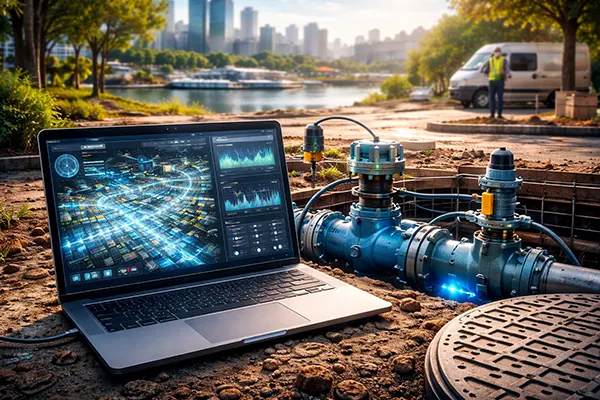
Digital Twins for Water Networks: How Cities Detect Leaks Before Infrastructure Failure
Urban water systems are under increasing pressure as ageing infrastructure, climate variability, and rising demand expose hidden weaknesses. In response, cities are turning to digital twins—dynamic virtual models that mirror real-world water networks in near real time. These systems combine sensor data, hydraulic modelling, and predictive analytics to identify anomalies long before they escalate into visible failures. As of 2026, digital twins are no longer experimental tools but practical instruments used by utilities to reduce water loss, prevent costly repairs, and improve long-term planning.
How Digital Twins Transform Monitoring of Water Infrastructure
A digital twin of a water network is built using detailed maps of pipes, valves, pumps, and reservoirs, combined with continuous data streams from sensors installed across the system. These sensors measure parameters such as pressure, flow rate, and water quality. The virtual model updates continuously, allowing engineers to compare expected system behaviour with actual conditions.
This comparison is critical. Even small deviations—such as a slight drop in pressure or irregular flow patterns—can indicate the early stages of a leak. Traditional monitoring often relies on reactive approaches, where issues are addressed only after visible damage occurs. Digital twins shift this paradigm towards proactive detection, enabling utilities to act before infrastructure is compromised.
By integrating historical data, digital twins also provide context. Seasonal demand changes, maintenance records, and past incidents are analysed alongside real-time inputs. This layered understanding helps distinguish between normal fluctuations and genuine risks, reducing false alarms and improving operational efficiency.
Key Technologies Behind Accurate Leak Detection
The effectiveness of digital twins depends on several interconnected technologies. Internet of Things (IoT) sensors form the backbone, transmitting high-frequency data from distributed points across the network. These devices have become more reliable and energy-efficient by 2026, allowing wider deployment even in older infrastructure.
Hydraulic modelling software plays a central role by simulating how water should behave under normal conditions. When real-world data diverges from these simulations, the system flags potential issues. Machine learning algorithms further refine detection by recognising patterns associated with different types of leaks, from small seepages to major pipe ruptures.
Cloud computing and edge processing ensure that large volumes of data are analysed quickly. In many cities, edge devices process information locally to detect urgent anomalies within seconds, while cloud systems handle long-term analysis and optimisation. This hybrid approach balances speed and scalability.
Real-World Applications in Cities and Utilities
Several European and global cities have implemented digital twins to address water loss, which can account for up to 30% of treated water in some networks. In Copenhagen, for example, a digital twin system has been used to monitor pressure zones, reducing leakage rates significantly by identifying weak points before failure occurs.
In the UK, utilities such as Thames Water have adopted predictive modelling tools linked to digital twins. These systems analyse pressure transients—sudden changes that can stress pipes—and recommend adjustments to prevent damage. As a result, maintenance can be scheduled more strategically, avoiding emergency repairs.
Emerging implementations in Asia and the Middle East focus on large-scale urban developments, where digital twins are integrated from the design phase. This allows engineers to test different scenarios, such as demand spikes or infrastructure ageing, and plan interventions years in advance.
Operational Benefits for Maintenance and Planning
One of the most immediate advantages of digital twins is the ability to prioritise maintenance based on risk rather than routine schedules. Instead of inspecting every section of a network equally, utilities can focus on areas showing early signs of stress or deterioration.
This targeted approach reduces operational costs and minimises service disruptions. It also improves workforce efficiency, as field teams are deployed with precise information about where and when intervention is needed. In many cases, repairs can be completed before customers notice any issue.
From a planning perspective, digital twins support long-term investment decisions. By simulating different scenarios—such as population growth or climate-driven demand changes—utilities can assess which upgrades will deliver the greatest impact. This leads to more resilient infrastructure and better use of public funds.

Challenges and Future Development of Digital Twins
Despite their advantages, digital twins are not without challenges. One of the primary barriers is data quality. Incomplete or inaccurate data can lead to unreliable models, especially in older networks where documentation may be outdated. Ensuring consistent data collection and validation remains a key priority.
Integration with legacy systems is another concern. Many utilities operate with a mix of old and new technologies, making it difficult to create a unified digital environment. Investment in modernisation is often required before a full digital twin can be implemented effectively.
Cybersecurity has also become increasingly important. As water systems become more connected, they present potential targets for cyber threats. Robust security frameworks and continuous monitoring are essential to protect both data and physical infrastructure.
What to Expect by the End of the Decade
By 2030, digital twins are expected to evolve into fully autonomous decision-support systems. Advances in artificial intelligence will allow models not only to detect problems but also to recommend and even initiate corrective actions in real time.
Integration with broader urban systems is another key trend. Water network digital twins will increasingly connect with energy grids, transport systems, and climate models, providing a holistic view of city operations. This interconnected approach will support smarter urban planning and sustainability goals.
Finally, cost barriers are likely to decrease as technologies mature. Standardised platforms and open data frameworks will make digital twins accessible to smaller municipalities, not just large metropolitan utilities. This wider adoption will play a crucial role in reducing global water loss and improving infrastructure resilience.