
Software-Defined Vehicles: How Cars Are Becoming Computers on Wheels
Modern vehicles are no longer limited to mechanical engineering alone. By 2026, the automotive industry has shifted towards software-defined vehicles (SDVs), where digital architecture controls everything from braking systems to infotainment and energy management. Carmakers are rebuilding their development strategies around software because drivers now expect continuous updates, connected services, advanced driver assistance, and personalised functionality. Instead of releasing a vehicle with fixed capabilities, manufacturers increasingly deliver cars that evolve during ownership through software improvements and cloud connectivity.
The Core Principles Behind Software-Defined Vehicles
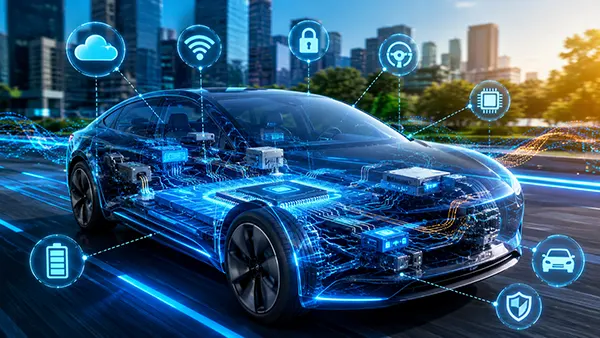
A software-defined vehicle relies on centralised computing systems rather than dozens of isolated electronic control units scattered throughout the car. Traditional vehicles often contained more than one hundred separate controllers responsible for specific functions such as lighting, climate control, or transmission management. SDVs reduce this complexity by using high-performance processors capable of managing multiple systems simultaneously. This architecture improves communication speed inside the vehicle and simplifies future upgrades.
Automotive operating systems have become a major focus for manufacturers. Companies including Mercedes-Benz, BMW, Tesla, Volkswagen, Hyundai, and Toyota now invest heavily in proprietary operating environments. Toyota’s Arene OS, for example, aims to create a programmable vehicle ecosystem where developers can continuously refine digital functions after production. Similar approaches can be seen in Volkswagen’s VW.OS and Mercedes-Benz MB.OS initiatives. These systems allow carmakers to control both hardware integration and software delivery within one connected environment.
Cloud infrastructure also plays a significant role in SDVs. Vehicles constantly exchange information with external servers for navigation data, diagnostics, traffic analysis, battery optimisation, and predictive maintenance. This connection enables manufacturers to monitor system performance remotely and detect technical problems before they become critical. In electric vehicles especially, software now determines efficiency, charging behaviour, and thermal management as much as physical engineering does.
Why Centralised Computing Is Replacing Traditional Vehicle Electronics
Older automotive architectures were built gradually over decades, leading to fragmented electronic systems supplied by different manufacturers. As digital functions expanded, these structures became increasingly difficult to maintain. Centralised computing solves many of these limitations by consolidating processing power into fewer but significantly more capable chips. Nvidia, Qualcomm, Intel Mobileye, and AMD now compete aggressively in the automotive semiconductor market because processors have become essential to vehicle performance.
Centralised systems also reduce production complexity. Instead of updating dozens of modules separately, manufacturers can deploy software patches through a unified framework. This approach shortens development cycles and lowers long-term maintenance costs. Carmakers can introduce new features much faster than before, including improvements to autonomous driving systems, energy consumption algorithms, or digital cockpit interfaces.
Another important factor is scalability. Manufacturers increasingly use shared vehicle architectures across multiple models and brands. A centralised software structure allows the same digital backbone to support hatchbacks, SUVs, electric saloons, and commercial vehicles with fewer hardware differences. This strategy improves production efficiency while enabling consistent user experiences across entire model ranges.
OTA Updates, Digital Features, and Subscription-Based Functions
Over-the-air (OTA) updates have transformed how vehicles are maintained. Instead of visiting dealerships for every software improvement, drivers can now receive updates remotely through wireless connections. Tesla popularised this concept years earlier, but by 2026 nearly every major automotive manufacturer supports OTA functionality to some degree. These updates can improve battery range, refine driver assistance systems, enhance infotainment interfaces, or resolve cybersecurity vulnerabilities.
Manufacturers have also introduced feature-on-demand services. Some vehicles now allow owners to activate optional functions digitally after purchase. Heated seats, adaptive suspension modes, advanced parking systems, performance upgrades, and autonomous driving capabilities may be unlocked temporarily or permanently through paid subscriptions. BMW, Mercedes-Benz, Audi, and several Chinese EV manufacturers have experimented extensively with this business model.
The subscription approach remains controversial among consumers. Supporters argue that it lowers initial purchase costs by allowing drivers to choose functions later. Critics believe customers should permanently own hardware already installed in the car. Regulatory discussions in Europe and North America have intensified because some authorities question whether essential safety functions should ever be restricted behind recurring payments.
The Impact of Artificial Intelligence Inside Modern Vehicles
Artificial intelligence has become deeply integrated into SDV ecosystems. AI systems analyse driving behaviour, optimise energy consumption, improve navigation routes, and support advanced driver assistance features. Machine learning models process enormous amounts of real-world data collected from connected vehicles to improve object recognition, lane positioning, and traffic prediction.
Voice assistants inside vehicles have also become considerably more sophisticated. Instead of simple command recognition, modern systems can understand conversational requests, driver preferences, and contextual behaviour. Some automotive assistants now integrate directly with smart home ecosystems, calendars, and productivity services. Drivers can adjust charging schedules, pre-condition cabin temperatures, or manage navigation routes using natural speech patterns.
AI additionally supports predictive maintenance. Sensors continuously monitor brakes, tyres, battery health, cooling systems, and drivetrain performance. Software can identify early signs of wear before visible failures occur, allowing drivers to schedule maintenance proactively. Fleet operators particularly benefit from these capabilities because downtime prediction significantly improves operational efficiency.
Cybersecurity, Regulation, and the Future of SDV Technology
As vehicles become increasingly connected, cybersecurity risks have expanded significantly. A software-defined vehicle effectively operates as a mobile network device containing sensitive user information, location history, biometric data, and cloud-connected services. This makes automotive systems attractive targets for cybercriminals. Manufacturers now invest heavily in encryption, intrusion detection systems, secure boot mechanisms, and network isolation technologies.
International regulations have also become stricter. UNECE cybersecurity regulations already require manufacturers in many regions to demonstrate protection against digital threats before vehicles receive approval for sale. Compliance includes vulnerability management, secure software development processes, and long-term update support. By 2026, cybersecurity engineering is no longer treated as an optional addition but as a mandatory component of vehicle development.
Another challenge involves data privacy. Connected vehicles continuously collect information about driving habits, locations, charging patterns, and infotainment usage. Governments and consumer protection agencies increasingly demand transparency regarding how this information is stored and shared. Manufacturers must balance data-driven innovation with growing concerns about surveillance and digital privacy.
How Software Will Shape the Automotive Industry Beyond 2026
The transition towards software-defined vehicles is expected to accelerate further during the second half of the decade. Future vehicles will rely even more heavily on unified digital architectures capable of supporting autonomous driving systems, advanced AI assistants, and highly personalised cabin experiences. Hardware development will remain important, but software capability will increasingly determine competitiveness between manufacturers.
Chinese electric vehicle companies are already demonstrating how quickly SDV innovation can progress. Brands such as BYD, NIO, XPeng, and Zeekr frequently release software improvements at a pace that traditional manufacturers previously struggled to match. This rapid development cycle forces established automotive groups to restructure internal engineering teams around software-first strategies.
The automotive sector is therefore undergoing one of the most significant technological transitions in its history. Cars are evolving into continuously connected computing systems where software updates influence performance, safety, efficiency, and ownership experience long after production. For manufacturers, this transformation changes business models, engineering priorities, and customer relationships. For drivers, it fundamentally alters what vehicle ownership means in the digital era.