
Autonomous Agricultural Machines: How They Are Transforming Field Work
In recent years, agriculture has undergone a noticeable shift driven by advances in automation, robotics, and data-driven systems. By 2026, autonomous agricultural machines are no longer experimental prototypes but working tools on farms across Europe, North America, and parts of Asia. These technologies are changing how fields are cultivated, how resources are managed, and how farmers make decisions. Their impact goes beyond efficiency, influencing labour structures, environmental practices, and long-term sustainability.
The Rise of Autonomous Machinery in Modern Farming
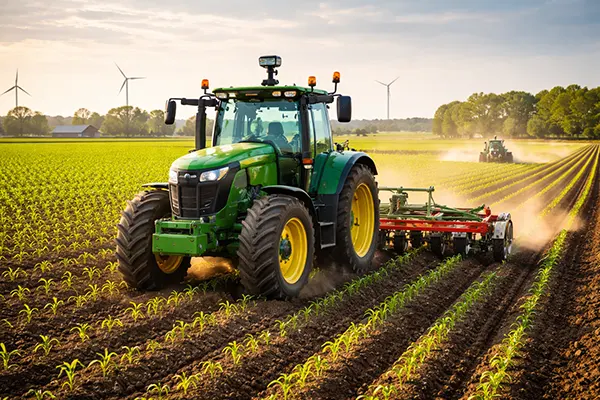
Autonomous agricultural machines include driverless tractors, robotic harvesters, and precision spraying systems that operate with minimal human input. Equipped with GPS, machine vision, and AI-based navigation, these machines can perform tasks such as ploughing, seeding, and fertilising with high accuracy. Leading manufacturers like John Deere, CNH Industrial, and AGCO have introduced commercial models capable of operating continuously with remote supervision.
The adoption of these systems has been driven by practical challenges. Labour shortages in rural areas, rising operational costs, and the need for higher productivity have pushed farmers to explore automation. Autonomous machines address these issues by reducing dependency on manual labour while maintaining consistent performance across long working hours.
Another factor is the integration of farm management software. Modern machines are connected to cloud-based systems that analyse field data in real time. This allows operators to monitor performance, adjust parameters remotely, and optimise workflows based on weather conditions, soil quality, and crop requirements.
Core Technologies Behind Autonomous Farming Equipment
The effectiveness of autonomous machines depends on a combination of advanced technologies. Satellite navigation systems, particularly RTK GPS, provide centimetre-level accuracy, enabling precise movement across fields. This precision is essential for tasks such as planting rows or applying fertiliser in targeted zones.
Machine vision and sensor arrays play a critical role in detecting obstacles, identifying crops, and analysing soil conditions. Cameras, LiDAR, and radar systems work together to create a real-time understanding of the environment, allowing machines to operate safely and efficiently even in complex field layouts.
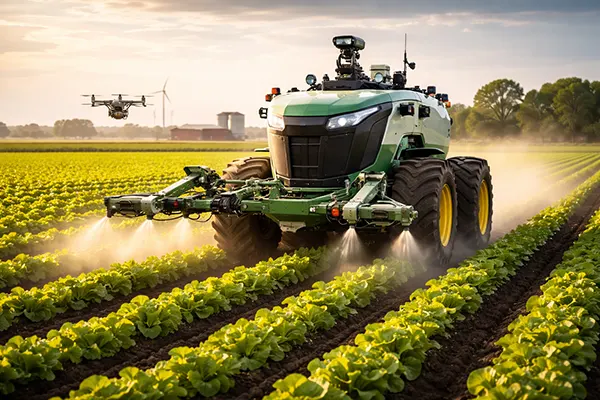
Artificial intelligence algorithms process the collected data to make decisions on the go. For example, autonomous sprayers can distinguish between crops and weeds, applying chemicals only where necessary. This reduces input costs and minimises environmental impact, which is increasingly important under modern agricultural regulations.
Impact on Productivity and Resource Efficiency
One of the most immediate effects of autonomous machinery is increased productivity. Machines can operate around the clock without fatigue, ensuring that critical tasks such as planting or harvesting are completed within optimal time windows. This is particularly important in regions where weather conditions can change rapidly.
Precision is another key advantage. Autonomous systems can apply seeds, fertilisers, and pesticides with a level of accuracy that is difficult to achieve manually. This reduces waste and improves crop yields by ensuring that each plant receives the appropriate amount of resources.
Fuel efficiency and energy use are also improving. Many modern machines are designed with optimised routes and reduced overlap, which lowers fuel consumption. In addition, there is growing interest in electric and hybrid autonomous tractors, especially in Europe, where environmental standards are becoming stricter.
Environmental and Economic Benefits for Farmers
From an environmental perspective, autonomous machinery supports more sustainable farming practices. By limiting over-application of chemicals and reducing soil compaction through controlled movement patterns, these systems help maintain soil health over time. This aligns with broader goals of regenerative agriculture and reduced carbon emissions.
Economically, the initial investment in autonomous equipment can be significant, but long-term savings are often substantial. Reduced labour costs, lower input usage, and improved yields contribute to a more predictable financial model. Many farmers are also accessing government subsidies and incentives aimed at encouraging digital transformation in agriculture.
Another benefit is data transparency. Autonomous machines generate detailed records of field operations, which can be used for compliance, reporting, and strategic planning. This data-driven approach allows farmers to make informed decisions based on measurable results rather than assumptions.
Challenges and Limitations of Autonomous Farming Systems
Despite the advantages, the transition to autonomous agriculture is not without challenges. High upfront costs remain a barrier, particularly for small and medium-sized farms. While leasing options and shared ownership models are emerging, accessibility is still uneven across different regions.
Technical complexity is another issue. Operating and maintaining autonomous systems requires a certain level of digital literacy. Farmers must understand software interfaces, data analytics, and system diagnostics, which may require additional training and support.
Connectivity also plays a crucial role. Reliable internet access is necessary for real-time data transmission and remote monitoring. In rural areas with limited infrastructure, this can limit the effectiveness of fully autonomous operations, forcing farmers to rely on semi-autonomous solutions instead.
The Future of Autonomous Agriculture by 2030
Looking ahead, the development of autonomous agricultural machines is expected to accelerate. By 2030, smaller, swarm-based robots may become more common, working collaboratively across fields to perform specialised tasks. This approach could further reduce soil impact and increase flexibility in farm operations.
Integration with other technologies, such as drones and satellite imaging, will enhance decision-making capabilities. Farms will increasingly operate as interconnected systems where data flows seamlessly between machines, sensors, and management platforms.
Regulatory frameworks are also evolving. Governments are beginning to establish standards for safety, data usage, and environmental compliance in autonomous farming. As these regulations become clearer, adoption is likely to expand, making autonomous machinery a standard component of modern agriculture rather than an emerging innovation.