
New Methods of Lithium Extraction: How Science Could Transform Battery Production for Electric Transport
Lithium has become one of the most strategically important raw materials of the twenty-first century. The rapid growth of electric vehicles, large-scale energy storage systems and portable electronics has created unprecedented demand for lithium-ion batteries. According to industry forecasts, global lithium demand is expected to continue rising throughout the decade as governments and manufacturers invest heavily in low-emission transport. This situation has encouraged researchers, mining companies and technology developers to search for more efficient, sustainable and economically viable methods of extracting lithium. Scientific advances made in recent years are beginning to reshape how this critical resource can be obtained, processed and supplied to battery manufacturers worldwide.
The Limitations of Conventional Lithium Extraction
For decades, lithium production has relied primarily on two approaches: extraction from hard-rock deposits and recovery from salt brines. Hard-rock mining, particularly from spodumene ore, dominates production in countries such as Australia. While this method can generate substantial quantities of lithium, it requires intensive mining operations, significant energy consumption and multiple processing stages before battery-grade materials can be produced.
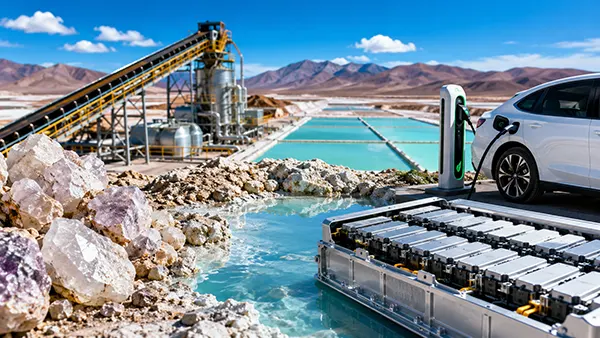
Brine extraction, widely used in South America’s Lithium Triangle, involves pumping mineral-rich groundwater into large evaporation ponds. The process depends heavily on climatic conditions and can take many months or even years before sufficient lithium concentration is achieved. Water consumption has become a major concern in arid regions where local communities and ecosystems rely on limited freshwater resources.
As global demand accelerates, conventional extraction methods face increasing scrutiny. Environmental impacts, long project development times and supply chain vulnerabilities have highlighted the need for alternative technologies capable of delivering lithium more efficiently while reducing ecological pressure.
Why Demand for Innovation Is Growing
The electric vehicle sector remains the primary driver of lithium consumption. Major automotive manufacturers continue expanding their EV portfolios, while governments across Europe, Asia and North America have introduced policies encouraging the transition away from internal combustion engines. This growth places considerable pressure on lithium supply chains.
Battery producers increasingly seek stable access to raw materials that meet strict quality requirements. Delays in mining projects or fluctuations in lithium prices can directly influence battery manufacturing costs. As a result, companies are investing in technologies that can diversify supply sources and reduce dependence on traditional extraction routes.
Researchers also recognise that future energy systems will require not only greater lithium production but also more responsible resource management. New extraction technologies aim to address both challenges simultaneously by increasing recovery rates while minimising environmental impacts.
Direct Lithium Extraction and Emerging Scientific Solutions
One of the most discussed innovations in recent years is Direct Lithium Extraction (DLE). Unlike conventional evaporation ponds, DLE technologies remove lithium directly from brine using specialised materials, membranes or chemical processes. The extracted lithium can then be processed into battery-grade compounds much faster than through traditional methods.
Several DLE approaches are currently being tested or deployed commercially. Adsorption systems use engineered materials that selectively capture lithium ions while leaving other minerals behind. Ion-exchange technologies rely on specialised resins designed to separate lithium from complex brine compositions. Membrane-based systems employ advanced filtration techniques capable of improving recovery efficiency.
Industry analysts consider DLE one of the most promising developments in lithium production because it has the potential to increase recovery rates significantly. Some pilot projects have reported recovery levels exceeding those typically achieved through evaporation methods, while also reducing land requirements and shortening production cycles.
Extraction from Geothermal Brines and Unconventional Sources
Scientists are also exploring lithium recovery from geothermal brines. These underground fluids, which are already used for renewable energy generation in certain regions, often contain dissolved lithium. Integrating lithium extraction with geothermal power facilities creates an opportunity to produce both clean energy and battery materials from the same resource.
Projects in Europe and North America have demonstrated growing interest in this approach. Because geothermal facilities already pump fluids to the surface, existing infrastructure can potentially support lithium recovery operations. This may reduce development costs while limiting the environmental footprint associated with new mining projects.
Beyond geothermal resources, researchers are investigating lithium extraction from oilfield brines, industrial wastewater and even seawater. Although many of these technologies remain in development, advances in materials science and nanotechnology continue improving the feasibility of recovering lithium from lower-concentration sources that were previously considered uneconomical.
The Future Impact on Electric Vehicle Battery Production
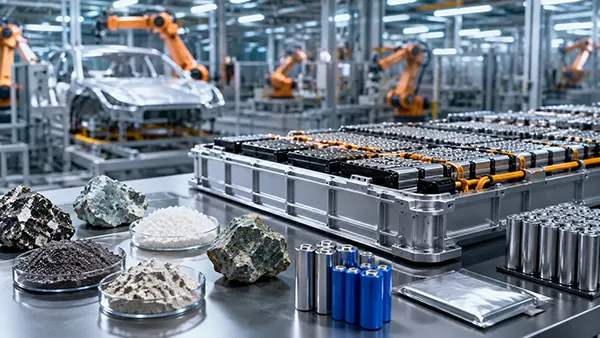
If emerging extraction technologies achieve large-scale commercial success, they could fundamentally alter the economics of battery manufacturing. Faster production cycles and improved lithium recovery rates may help stabilise supply and reduce some of the bottlenecks that currently affect the global battery industry.
More diversified lithium sources would also strengthen supply chain resilience. Countries with geothermal resources, industrial brines or other unconventional lithium-bearing fluids could participate in production without relying exclusively on traditional mining operations. This diversification may reduce geopolitical risks and create new opportunities for regional battery manufacturing industries.
Environmental performance will remain a key factor in future adoption. Automakers and battery manufacturers increasingly assess the sustainability of their supply chains. Extraction methods that require less water, consume less land and generate lower emissions could become important competitive advantages as environmental reporting standards continue to evolve.
Scientific Challenges Still to Be Solved
Despite substantial progress, many advanced extraction technologies are still transitioning from pilot projects to commercial deployment. Scaling laboratory successes into industrial operations presents technical and financial challenges. Performance must remain consistent under varying geological conditions while maintaining economic viability.
Researchers continue developing new sorbent materials, membrane technologies and electrochemical processes capable of improving lithium selectivity and reducing operational costs. Advances in artificial intelligence and process optimisation are also helping engineers design more efficient extraction systems.
The coming years will likely determine which technologies become industry standards. While conventional mining will remain an important source of lithium for the foreseeable future, scientific innovation is expanding the range of available options. As electric vehicle adoption grows throughout the 2020s and beyond, new lithium extraction methods may play a decisive role in securing the raw materials needed for the next generation of energy storage technologies.